Showing posts with label GST glutathione. Show all posts

Sunday, June 14, 2015

CHANGES IN GLUTATHIONE AND GLUTATHIONE REDUCTASE POSITIONING GLUTATHIONE-S-TRANSFERASE AS A FUNCTION OF CELL CONCENTRATION WITH ENZYME ACTIVITIES FOUND TO INFLUENCE BEHAVIOR.

Glutathione reductase (GSR, GR) locus in the chromosomal region 8p21.1, (EC 1.8.1.7)-(§, ‡) is a protein-S-glutathionylation, as a (human) Mitochondrial localization of hGSR and its associated enzymes cellular thiol/disulfides S-Glutathione reductase (GSR) which is the importance of significance in reversible thiol modifications which  regenerates reduced glutathione (GSH) and GSSG to the reduced form found in the obvious structural properties of glutathione reductase. The redox regulating enzymes relationship with TTase (thioltransferase) activity with the ratio of the activities of G3PD, as the mechanism (of cellular repair) 'differs' (gssg-g6pg) according to the type of reducing glutathionylated mixed disulfide, including protein-S-S-glutathione (PSSG), GSR reduces (PSSG) modified by thiolation to a normal level in human lens epithelial (HLE) cells. This may have implications in stress- and aging-related pathologies in astrocytes and granule cells, demonstrated by comparable mitochondria/cytosolic concentrations of its thiol proteins, where a mitochondrial leader sequence (cDNA) is present in the gene structure of human GSR and may be the Cytoplasmic Isoform (derivative or inhibitor formed) of  mitochondrial dysfunction that contains the catalytic cysteine revealing a possible therapeutic strategy/target, also indicating transiently accumulated inhibitor proteins modified by thiolation (cysteine catalytic subunits) compounds that inhibit these (re)activation processes (hGSR) with its structure-based prosthetic group (FAD) cofactor is common because of the levels of cysteine available; are mitochondria/cytosolic concentrations that the Glutathione reductases reversible thiol modifications which catalyzes the reduction of GSSG to GSH the natural GR substrate is dependent on the NADPH:GS-SG ratio.
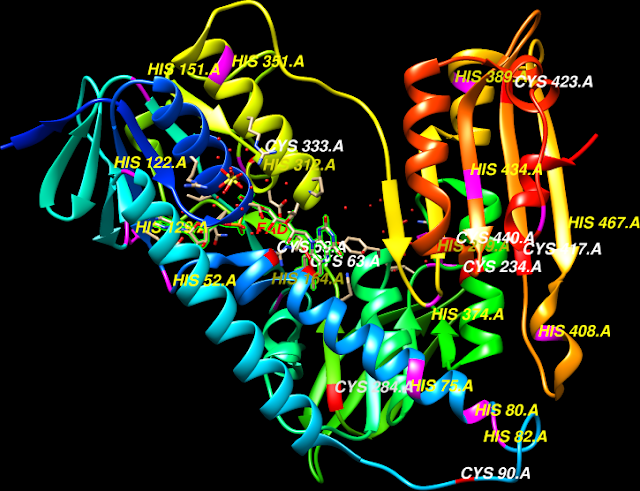
PDB Id: 3DK9 Cys58 and Cys63 represent the enzyme's results seen as the reductive (GSH) Cys-58 and oxidative (GSSG) Cys-63 is the relationship of these two enzymes, His467' is seen to interact with Cys63 more optimally and Cys-58 produces the second GSH intermediate molecule of the reaction is the reduced glutathione-to-oxidized glutathione ratio (GSH/GS-SG) when compared to the substrate free form correlated with (FAD) the flavin compounds, flow from NADPH to the substrate GSSG via flavin. The reducing equivalents needed for regeneration of GSH are provided by NADPH. The enzyme has affinity for flavin adenine dinucleotide (FAD) the prosthetic group of GR, and maintains high levels of reduced glutathione  (Cytoplasmic Isoform: Produced by alternative initiation of isoform Mitochondrial homodimer, derivative or inhibitor formed from the GSR Pyridine, dimerisation domain.) in the cytosol. Glutathione reductase (GR) plays a key role in maintaining either a thiol group or a nonprotein sulfhydryl group (NPS) form of GSH, and potential for thioredoxin and glutathione systems, as thioredoxin dose not require GSH and GR for catalytic activity. Glutathione reductase (GR) utilizes NADPH produced by G6PDH (glucose-6-phosphate dehydrogenase) enzyme activities, and enzyme glutathione reductase (GR) represents the erythrocyte glutathione-reducing system (GRS), of the GSH pathway to oxidation and inactivation in the activity of GSH peroxidase and GSH reductase. Expression of the regulatory subunit of gamma-glutamylcysteine synthetase/ligase (GCL) catalyzes the first and rate-limiting step in the production of the cellular (GSH) glutathione. Dietary riboflavin (Vitamin B2) intake produces its active essential coenzyme flavin forms, riboflavin mononucleotide (FMN) and flavin adenine dinucleotide (FAD) of glutathione reductase (GR), or the GR activity correlated with red-cell flavin compounds.When both GSSG and NADP(+) substrates and products are present, glutathione reductase (GR) is a enzyme required for the conversion in the presence and absence of flavin adenine dinucleotide (FAD), glutathione reductase (GR) is an obligatory FAD-containing homodimer. GSSG via glutathione reductase (GR) regenerates reduced glutathione which is essential for antioxidant defense. The flavoenzyme glutathione reductase (GR) reduces 'oxidized glutathione' (GSSG) back to GSH, also involving glutamate-cysteine ligase and modulatory (GCL)-can be upregulated ∉ as the cellular GSH system, indicating short-term and heritable tolerance of exposure to oxidative stress from/via numerous reporting ∈ mechanisms. NADPH is used by glutathione reductase for the reduction of oxidized glutathione (glutathione disulphide) GSSG to GSH-dependent peroxide metabolism. 4-Hydroxynonenal (HNE) is one of the major end products of lipid peroxidation which may lead to enhanced action of  the (GSR) oxygen radical, glutathione S-transferases (GSTs) are specifically suited to the detoxification and removal of 4-HNE (∋ or ∝) from cells which may provide a basis for selective cellular and/or subcellular distribution of mitochondrial and cytosolic to individual detoxifying gene inducer activities of glutathione reductase (GR), the cellular (GSH) glutathione. It was evident the enzyme glutathione reductase (GR) represents the erythrocyte glutathione-reducing system (GRS), of the GSH pathway to oxidation and the (∉ or ∝) inhibition constant for reversible inactivation in the activity of glutathione related antioxidant enzymes. And GSH reductase may be one of the factors that remained in focus that suggests its effects on the antioxidant system related to glutathione synthesis (GCL), degradation, and functions.

Biological Xenobiotics, Extracts, Applications of note In the presence of Glutathione reductase.:

Schisandrin (Schisandra chinensis), used in traditional Chinese medicine. PMID:21328628
Transketolase (TK) and transaldolase (TA)
Melatonin PMID:15571523, 19475625
Blackberry (Rubus sp.) cultivars, The 'Hull Thornless',  PMID:11087537
Glutathione dehydrogenase (ascorbate)-[dehydroascorbate reductase (DHAR), and glutathione reductase (GR). This enzyme participates in the glutathione metabolism the active metabolite of vitamin D3 increases glutathione levels.] PMID:11087537, 23770363
3H-1,2-dithiole-3-thione nutraceutical D3T potently induces the cellular GSH system, Anethole trithione is a drug used in the treatment of dry mouth, the Anethole trithione isomer is related to anethole (anise camphor) used as a flavoring substance. PMID:17206382*, 19408115,     19176875*, 15896789, 18408143*, Glutathione reductase
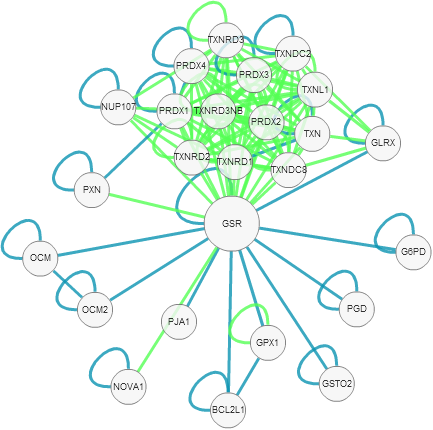
16946404*
Cassia fistula used in herbal medicine. PMID:19088944
Sanguinarine is extracted from some plants, including bloodroot and Mexican prickly poppy (Argemone mexicana) where argimone oil causes Epidemic dropsy. PMID:11260782
Vitamin E, PMID: 15672860
Tocotrienols are natural compounds members of the vitamin E family found in select vegetable oils are an essential nutrient for the body. PMID:21845802
Pyrrolizidine alkaloids are produced by plants as a defense mechanism against insect herbivores consumption of PAs is known as pyrrolizidine alkaloidosis. PMID:20144959
Apple extract (AE) PMID:20401791
Lipoic Acid an organic compound, forming a disulfide bond, available as a dietary supplement PMID:15246746, 21073761
Carnitine PMID:15246746, 10581232
Vitamin D upregulated expression of GCLC and GR. PMID:23770363
Vitamin D3_ PMID:12416023
Vitamin E_ PMID:10459841, 8360018, 18296478, 21845802, 15490422, 16885600, 7062348, 20729758, 21086752
Shidagonglao roots Mahonia fortunei (十大功劳 shi da gong lao) species contains the alkaloid berberine PMID:199382 18
Coenzyme Q10 (CoQ10) PMID:16621054
Trigonella foenum graecum seed powder (TSP) PMID:15026271
Boschniakia rossica, a ̱̱̱Traditional Chinese medicine. PMID:19352025
Aegle marmelos commonly known as bael is a species of tree. PMID:18830880
Scoparia dulcis A medicinal plant, dulcis. PMID:21905284
Fenugreek (Trigonella foenum-graecum)  is used as a herb. PMID:15026271
L-arginine (L-Arg) semiessential supplementation common natural amino acid. PMID:16038634
Hypericum perforatum (St. John's Wort) PMID:18754092
Urtica dioica often called common nettle PMID:12834006
Usnea longissima, a medicinal lichen. PMID:16169175
Capparis decidua, a fruting tree also used in folk medicine and herbalism. PMID:22272107
Indole-3-carbinol found at relatively high levels in cruciferous vegetables such as broccoli
PMID:9512722, 14512388
Ascorbate Vitamin C. PMID:14512388
Sulforaphane It is obtained from cruciferous vegetables such as broccoli. PMID:12628444, 18607771*, 22303412
Andrographis paniculata, may shorten the duration and lessen the symptoms of common cold. PMID:11507728
Vitamin B-1 (thiamine) PMID:1132146, 10450194, 21308351*, 11514662*, 1270885
Vitamin B2 (riboflavin) PMID: 5822598, 5550591, 1201246, 5794396, 237845, 3677785, 3582603, 12194936, 2721660, 1261528, 5721130, 14608016, 4400882, 7883462, 844948, 7337797, 5881,12641409, 4393763, 3497609, 16883966...(№ 1244, OMIM.138300)
Vitamin B-6 (Pyridoxine) PMID:2721660, 3582603, 10450194, 15490422, 1270885, 7417521, 7337797, 7814235
Vitamin B9 (Folic acid)  PMID: 844947, 1270885
Aspartate transaminase (AST) or glutamic oxaloacetic transaminase (GOT) catalyzes the interconversion of aspartate an important enzyme in amino acid metabolism. PMID:1132146, 10450194, 1253408
β-Carotene is a strongly colored red-orange pigment abundant in plants and fruits. PMID:19957244
3-Hydroxykynurenine (3OHKyn) a metabolite of tryptophan. PMID:11273669
Ajoene ((E,Z)-4,5,9-trithiadodeca-1,6,11-triene 9-oxide), a garlic-derived natural compound. PMID:9986706 PDB: 1BWC
Propolis a product made by bees. PMID:19394397
Resveratrol produced naturally by several plants PMID:12797471
 No CiTO relationships defined:
 http://vixra.org/abs/1506.0104
 http://www.citeulike.org/user/emissrto/article/13645622

Sunday, April 13, 2014

Gluathione peroxidase (GSH-Px1-GPX1) a extracellular selenoenzyme expression modulates xenobiotic metabolising enzymes.

     Glutathione peroxidase (EC 1.11.1.9) protects against oxidative damage via the chemoprotective action of nitric-oxide mediated lipid peroxidation and anti oxidative defense by gluathione (GSH-Px1-GPX1) a extracellular selenoenzyme, extracellular glutathione peroxidase (E-GPx) and cellular (C-GPx) detoxifies hydroperoxides. Other antioxidant genes (AOX) as Gpx1, is located in the cytosol and in (mt) mitochondria. Epithelial antioxidative enzymes (AOEs) are activities of GSH-Px1 (gluathione peroxidase), (SOD) superoxide dismutase, and thioredoxine reductase (TXNRD1) by itself or with thioredoxin (Trx) are antioxidant enzymes. Glutaredoxin (Grx) are reduced by the oxidation of glutathione an antioxidant, (The effect of iridoid  glucosides such as oleuropein an antioxidant, can often be bound to glucose.) phenolic compound isothiocyanate sulforaphane found in olive leaf, increased cell-lysate NAD(P)H:quinone oxidoreductase (NQO1) phase II activities reduction reactions, catalyzed such as by glutathione-S-transferase (GST) can catalyze the conjugation back to the thiol group and other GPx mimics (converted into selenocysteine), to the reaction site of glutathione (GSH) and antioxidants, implying (GR) reduction reactions back to glutathione, are an evolutionary relationship between GST and GPx/glutathione system defense in oxidative stress. "Glutathione" peroxidase (Gpx) content, and glutathione reductase (GR) components compose the glutathione (GSH) system, this contains Selenocysteine (Sec), the 21st amino acid at the active GPX site (Homo sapiens chromosome 3, GRCh37 primary reference: rs644261)- TGA  => UGA (selenocysteine, which occurs at the active site of  glutathione peroxidase GPX1 is coded by UGA, isoform 1 NM_201397.1-variant 1 represents the shorter transcript that  encodes the longer isoform 1, as compared to isoform 2- NM_000581.2 variant 2); (rs1050450) is intronless and has a shorter C-terminus. They represent the cDNA as a molecular mechanism (TGA) for down-regulation of mRNA expression and transcriptional code is a regulatory switch at the translational-step delivered to the ribosome in genes similar to Glutathione peroxidase 1 (GP, Gpx1, GSHPX1): locus 3p13-q12 (§, ‡,). GSH-Px is an essential nutrient selenium dependent GPX, by which mRNA translational repression of selenium-binding protein (SBP1) is accomplished when GPX1 increased in human plasma, if selenium-deficient, while independent of Se values in leukocyte (White blood cells) from correspondingly damaged DNA. In fibroblast activity, GPx1 was effective through the prevention or repair of DNA damage. The reductive detoxification of peroxides in cells modulates xenobiotic metabolising enzymes via anticarcinogen supplementation, e.g. selenium-yeast  in human plasma. GPX in turn, can lead to carcinogenesis. The heterozygote has an intraerythrocytic environment (red blood cell) with the favorable higher peroxidase activities role in malarial resistance. An in-frame GCG trinucleotide repeat was homozygous for the pseudogene GPX1 Pro197Leu-like two alleles associated with 6 GCG repeats coding for a polyalanine tract. CuZn-SOD (copper/zinc-superoxide dismutase) and other oxidoreductases contribute to the cellular defenses, repair of oxidative damage to DNA. Chronic hyperglycemia (excessive blood sugar) causes oxidative stress, 'Extract silymarin and Berberine-'may' overcome insulin resistance. And for diabetes Astragalus membranaceus  can improve the protective effect, an extract from Shidagonglao roots (Mahonia fortunei)  or the effects of Berberine from the main alkaloid of Coptis chinensis  are agents for preventing sepsis and its lipopolysaccharide (LPS) complications in human microvascular endothelial cells. GPX is down-regulated and peroxiredoxin (PRX) is up-regulated. Both use thioredoxin (Gpx and Prx, suppress Trx, a cysteine-based thioredoxin-specific GPx-Txn expression.) to recharge after reducing hydrogen peroxide (H2O2) along with other cellular molecules. Also found in transcripts in ocular tissues from oxidative anterior damaged cells,  GSH-dependent recombinant human lens thioltransferase (RHLT)* being  its repair systems. GPX1 could supress staurosporine-induced late generation of ROS, corresponding to reduction in visual loss.  Its role in pathogenesis of  (inflammatory disorders of blood antioxidant enzyme system) as an autoimmune disease background, appears to be the hydroperoxide metabolism in diverse pathogens*, an enzyme by single administration streptozotocin  (60 mg/kg) of negative implication, oxidative damage or antioxidant status when examined in contrast as metabolic syndrome through the GPX down-regulation are comparable, with reduced-enzyme-activity to the T allele of the GPx-1 genetic leucine/proline polymorphism at codon 198  approximately 70% for pro197 and 30% for leu197 named Pro198Leu (rs1050450). The leucine-containing allele was less responsive to GPx-1 enzyme activity. Thioltransferase (TTase) with GPx the dethiolating enzyme, thiol* catalysis glutaredoxin thioltransferase (Grx) content and activity to the thiol status produced by the oxidation of glutathione: a seleno-organic compound ebselen  (2-phenyl-1,2-benzisoselenazol-3(2H)-one) catalyzed in vitro, has been reported to '« mimic » development of small-molecule selenium compounds' ('synthetic antioxidant' GPX)  required for, a diphenyl diselenide PhSe group 'in the catalytic activities' is introduced by reaction (a monocyte-derived soluble protein (M-DSP/Gpx1) with 5-LO, (5-lipoxygenase ) activity this 'recovered (M-DSP)-GPx inactivation'. In which Serum Malondialdehyde (MDA) a marker (oxidative activity) generated from, reactive oxygen species (ROS) is thought to cause DNA damage with various antioxidants usually homeostatically controlled by endogenous superoxide dismutase (SOD), as a by-product and the oxygen-sensor neuroglobin (Nb), GSHPx reactive neurons or in brief neuronal damage (apoptosis) after ischemia. Antioxidant enzymes such as Cu/Zn-superoxide dismutase (SOD) and a 21-kD protein (involved in neuroprotection) GPx1 both in the free radical chain, protects neurons and Microglial cells. Microglial cells are, sensitive to small changes from Reactive oxygen species (ROS), free radical scavenging enzymes-mediated apoptosis. Neuronal loss and deteriorating CNS function: is linked to the pentose phosphate shunt, the (PPP) pentose phosphate pathway, has a relatively low content of enzymatic antioxidants, in a higher cellular ROS level to oxidative stress. A candidate (SePP1) selenoprotein (P-plasma) or  genetic variations homologous to GPX1 are rapidly degraded at relative low selenium concentrations. Microsomal (reconstituted fraction) glutathione transferase-1 (hGSTP1) decreased cytotoxicity ( cartilage degradation and regeneration [Leucas aspera] to mitochondria damage, directed to citrulline- containing proteins) by effects of hydrogen peroxide 'H(2)O(2), which causes lipid peroxidation (LPO) in the (ER) endoplasmic reticulum. In which LPO product Malondialdehyde and other Thiobarbituric acid reactive substances - TBARS - are formed as a byproduct, when the effects of GPX1 ( glutathione peroxidase 1)' is measured, the effects of Centella asiatica  extract detoxifies. Antioxidants and detoxication agents as antigenotoxic* agents (isoflavones via dietary intake) were also observed as cytogenetic end-points* of carcinogenesis. Over-expression could drain the  reduced glutathione ( hepatic and GSH dependent enzymes), cellular glutathione (GSH) levels, GSH acts as a feedback rate-limiting inhibitor of its synthesizing enzyme GCL (gamma-glutamyl-cysteine synthetase) activity,  Diosgenin  is a useful Marker degradation-compound of Low-density lipoprotein (LDL) and high-density lipoprotein (HDL) against oxidation. The compound buthionine sulfoximine (BSO) inhibits the first step of glutathione synthesis, concerning the mechanism of GSH depletion. Gpx suppresses (thioredoxin) Trx - expression, which augments Anti-clastogenic (mutagenic agents), potential DNA-binding (heritable multigenerational/evolutionary tolerance), in a cDNA open reading frame (ORF) GPx1 is a small inversion (~pericentric), incorporating the co-translational selenocysteine which may be unique to the insertion sequence elements.


(Click on image to zoom)
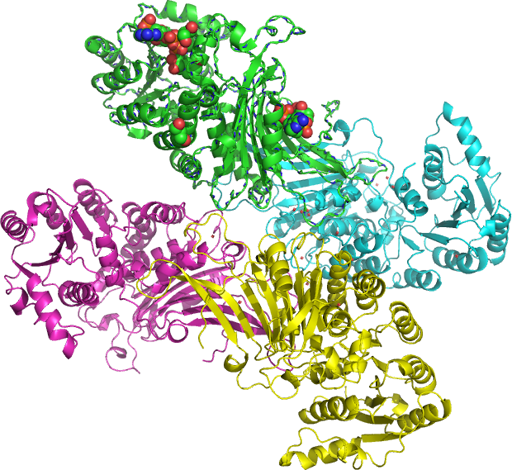
      gpx1Biological Assembly GPx-1 tetrameric structure with an altered carcinogen metabolism and reduce oxygen tension to explain the anti-carcinogenic effects, the redox donor (hTXN-oxidoreductase Figure 4) status  (Figure 2) of one oxygen atom limited to only two regions may carry missense variant (rasmol_php_C and _D) a reaction incorporated into the overall tetrameric structures instability potentially in humans through modulation of biosynthetic and genetically modified GSH enzymes binding the selenocysteine insertion sequence elements. The specific activity of the enzyme Sec suggest how the molecular pathway might work, as the glutathione pathway may influence the enzyme Sec reaction site incorporation sequence in the 3'-untranslated region UTR of glutathione (GSH) may further reveal a signaling pathway that is activated. The differing and interacting roles of GPX1 and (Sec.) Selenocysteine Synthase [doi: 10.2210/rcsb_pdb/mom_2008_8] both vectorsgpx1together with glutathione (HUMAN GLUTATHIONE TRANSFERASE (HGST) PDB ID: 1LJR ligand component GSH: C10 H17 N3 O6 S, molecules colored: aquamarine) did; activates two multiple signaling pathways in one of the Gpx1 variants 1 or 2 nucleotide, the nonsense codon, UGA has both, related to the antioxidative pathway vectors together PDB ID: 1gp1 (2-AMINO-3-SELENINO-PROPIONIC ACID: ALANINE  molecule colored: purple), is located near the selenocysteine insertion sequence element PDB ID: 2F8A (rainbow colored: ribbons) mutant of  GPX1. Interrogation of data based on experimentally determined models are limited but revealed network structures that dynamically conveyed information from the antioxidant enzymes that share a common pathway considered most important in the selenocysteine synthesis pathway from the information suggested, and they implicate at least one selenoprotein (GPx-1) in the process.

Monday, December 30, 2013

G6PD, Exon 12 is an exonic splicing silencer containing/substituted define codon regions involved in the G6PD mRNA¹

G6PD (EC 1.1.1.49) glucose-6-phosphate dehydrogenase [§§; †, ‡], situated at Xq28 locus-coding region is the rate-limiting enzyme, of the (PPP) pentose phosphate pathway. G6PD deficiency  and its  X-linked gene mutations exons 2-13 (160 different mutations) are the most common inborn error of metabolism, in human red blood cell (RBC) enzymopathy, among humans. G6PD is divided into 12 segments and involves an exonic splicing enhancer (ESE) in exon 12 with 13exons and an intron present 5' UTR, proximal to the 5' bkp-breakpoint region. Intron comparisons from the second to the thirteenth exons of G6PD gene, 3′ UTR towards the 3' end of the gene to exon 1 located in 5' UTR G6PD is a region of deleted alleles (ASO-PCR) or G-6-PD the many population genetics variants/wild-type (160 different mutations and  300 G6PD variants) assuming that, at exon2 (2,3-BPG* levels) are hypothesized that G6PD partly 'overlaps' the IKBKG gene confined to the blood. The subunit (G6PD), consists of the biochemical-characteristics of 531 amino acids. This enzyme is the only process in mature red cells for NADPH-generation it involves oxidation of glucose as a » hexose « ( xenobiotic compounds) pathway ('naturally found in D-* and the unusual L- Monosaccharide forms or between 2,3-BPG*) pentose and hexose phosphates, an alternative to glycolysis, converts glucose in which ATP is produced' from the conversion of glucose-6-phosphate into ribulose 5-phosphate in liver cytosol in which a residue in the dimer interface (@ 37° C) structural G6PD is a NADP+ dependent. At the tetramer interface an Apoenzyme (PDB:2BH9), that stimulates G6PD to produce (reversible enzyme transketolase (TK) presence is necessary) more NADPH. Hemolytic crises or dysregulated NADPH oxidase located in the 3' dependent 5' UTR G6PD in humans determines the response, in which G6PD deficiency is prevalent with development of  chronic hemolytic «« anemia (CNSHA-HNSHA) associated with food-induced or a exogenous-agent and drug-induced º' ª hemolytic crises which led to the discovery of G6PD deficiency. Sulfatase  (STS, EC 3.1.6.2) catalyzes Phenyl-Piracetam [↩] it also stacks well  and involves the phosphoinositide 3-kinase (PI 3-kinase) pathway in the employed doses in related induction of certain enzyme (Glucose 6PD) synthesizing activities (glycolysis) five metabolite levels of  insulin signal transduction. These include, Sulforaphane  or broccoli-sprout extracts increased cell-lysate NAD(P)H:quinone oxidoreductase (NQO1) phase II activities (Tanshinone IIA⊕), administered to cells and  in human supplementation studies, were found to be in balance with green tea extract (GTE), (EGCG) epigallocatechin-3-gallate   to generate detoxifying reactions to hepatotoxicity (can be prevented by amalika, Emblica officinalis   which supports the chemopreventive action of the silymarin extract Silibinin , of the milk thistle) preventing nitric oxide-mediated lipid peroxidation (LPO) and antioxidant defense system (GSH) glutathione ( GSH-Px and GR) depletion, via an antioxidant response element (ARE ⊕) mechanism-based inhibitor, element (NRF2) regulates (ARE)-regulated genes. A lack of NQO1 protein predisposes cells to benzene toxicity and to various forms of leukemias and toward therapeutic modulation (Acetylcysteine  and acetaminophen) of pulmonary oxygen toxicity. G6PD-deficient variants is the result of  various enzymopathies (but not GPI-chronic hemolysis), that glucuronidated-bilirubin values (UGT1A1 genotype) tended to parallel, (CNSHA) hyperbilirubinemia with hemolytic anemias, single amino acid substitutions resulting in 'mutation of variants'. Or to inherited³ and acquired physiologic changes in red cell enzyme G6PD deficiency leading to favism ( an A- variant reaches the polymorphism level the commonest a Mediterranean form, other alleles A, A+, the primordial human type B cell and normal B+ and a rare B- phenotype are neutral. Malaria-infected human red cells possess at least two pathways (in a dimer -- tetramer equilibrium) where carbonic anhydrase (CA) isoenzymes (allozymes are variants often neutral)  the native structure may serve different roles [malaria resistance] in the G6PD-deficient erythrocyte) and transmitted biochemical poly(A) characteristics (58 different -missense-mutations account for 97, poly(A) -substitutions-towards mutation of variants) divided into 5 classes of energy metabolism {chart} enzymes. Where GSH represents red cell enzymes involved in glycolysis, enolase (ENO), phosphoglycerate kinase (PGK), phosphofructokinase (PFK  that phosphorylates fructose 6-phosphate (PHI)),  hexokinase (HK), aldolase (ALD), and pyruvate kinase (PK)) activity. From class 1--chronic variants with administration of 8-azaguanine to class IV--increased enzyme activity. NADP-linked enzymes, malic enzyme (ME, EC 1.1.1.40) malic dehydrogenase (MDH) that catalyzes  (NAD-ME) by the chemical reaction to NADP-ME and ATP:citrate lyase (ACL) and (IDH)-isocitrate dehydrogenase (NADP-ICD) channeled NADPH into the fatty acid biosynthesis influences carbohydrate metabolism and partly account for stimulated nucleotide synthesis. Poly(A) RNA  by carnitine- palmitoyl (CPT) and acyl (ACO) mRNA, or HMG-CoA oxidase donating activities in inhibition of meiotic maturation, acetyl-CoA carboxylase (ACC) was also measured in the forming DNA adducts. The metabolism of xylitol remains intact to complete the NADPH cycle.  The G6PD gene is X-linked, G6PD synthesis leading to G6PD deficiencies which occurs in the oocyte where X-inactivation ( Xq13-XIST; 314670) large deletions or a loss-of-function mutation does not occur or might be lethal, had affected the red cell and white cell series differently, in the mouse presumably the polymorphisms of hemoglobin are on the X chromosome in man, according to hybrid cell studies of a number of domesticated species.

  Exon 12 is an exonic splicing silencer¹ containing other-(exons II, III-IV, V, VI-VII, VIII, IX, X, and XI-XIII)-spliced exons regions and an exonic splicing enhancer (ESE) in exon 12. Using the G6PD model, Exon 12, may define 12 base pairs, or two DNA base substitutions in the deamano-NADP (EC 1.1.1.49) utilization. g6pd
A regulatory element within exon 12 controls splicing efficiency and the rate of intron removal. The UGT1A1 gene and the exon 12 of G6PD gene and the polymorphisms of UGT1A1 two DNA base substitutions C1 and C2 for example Gly71Arg from Arg to His are the mutational activities (dimer pink PDB: rasmol_php SNP: L235F, Figs. 1-2 and 3) of serine-arginine-rich (SR), proteins located in exon 12 of the G6PD gene.

g6pd The most common mutations are: 1376 G-->T substitution abnormality (C1) and 1388 G-->A (G6PD Kaiping) abnormality (C2) is A-->G in exon2, both in exon 12 binding to the C-rich motifs (ESE) blocked binding of  the serine-arginine-rich splicing factor 3 (SRSF3) but not SRSF4, PDB-2I2Y.
g6pd Where G6PD partly 'overlaps' the IKBKG gene PDB: 2JVX-blue-cartoon located in  the ribbon with the ESE-red-exon (XII) 12. The G6PD gene is 18 kb long divided into 12 segments ranging in size from 12 base pairs to 236 bp and interacts with elements in the beta-globin HBB common polymorphism site C1311T/IVS-II promoter are more common forms of the protein hemoglobin in the beta-globin HBB derived from the 3'-end of intron 7 is one of the 2 types of subunits in human red cell (RBC) G6PD. An ratio between heterozygote and hemizygote in males and between hetero and homozygote in females of cellular components evident from the state of G6PD activity modified by the rate of  (GdX PMID: 8786131, PDB:2BH9  a deletion variant of G6PD PMID-17637841) intron removal , shows that an intron present on the 5' UTR (located on Fig. A, the end of blue cartoon situated near the broken blue strand) of G6PD the first intron of the G6PD genome isozymes can be observed, 'GdA and GdB'³ can be bound by NADP by a direct source of ROS effects of high glucose, inhibition of PKA decreased ROS can use a direct repeat-3 (DR3) vitamin D response element liganded vitamin D receptor.
g6pd


  • .....five metabolite levels of insulin signal transduction. [↩]
  • Friday, October 09, 2009

    MFI-, FAU-, and FER-type zeolites hydrophobic patch UBQ The three-step mechanism requires Fubi

    Gene: FAU - Finkel-Biskis-Reilly murine sarcoma virus... of the fox sequence in the (FBR-MuSV) (Homo sapiens): [§§] (also referred to as the UBQ superfamily ribosomal protein hydrophobic patch UBQ The three-step mechanism requires FubiFUBI) is not likely to be the MEN1^+- multiple endocrine neoplasia I (Homo sapiens) tumour, Suppressor gene FAU gene maps to the long arm of chromosome 11 band q13, close to the PYGM locus by double-colour chromosome painting analysis NOF/MRPL49 - mitochondrial ribosomal protein L49 (Homo sapiens) (Neighbour of FAU) was found to be based on the same simple kinetic rules in all cell lines. (DNA chain termination, DNA polymerase inhibition, one form of selective mitochondrial poisoning, and FAU-mediated toxicity) 10-fold higher IC-50 effect on mitochondria may be useful as an unlabeled antineoplastic agent might lead to little marrow toxicity. Were used to study the interaction of highly siliceous MFI-, FAU-, and FER-type zeolites with adsorbed methylamine (MA), magic-angle spinning (MAS) NMR, Spectroscopy, Fourier Transform Infrared FTIR, and Raman Spectrum Analysis spectroscopies (◊), pointed out independent disease-associated mutations with MEN1 for constitutional genetic alterations in the FAU of the approximately 5-Mb region of 11q13 that includes MEN1[↩] designed to carry different parts (The two-step scheme, 2 putative human homologuesanti bait coimmunoprecipitation 
EBI-1073540,EBI-1061313, EBI-1073592 FAU Ubiquitin-like protein FUBI located in the vicinity of the double six-member rings (D6R); FAU1P exhibits the (AAG) triplet repeat present in chromosome 18 it maps right next to human gene, NOF* that follows the GT/AG rule.) of the 11q13 region resulted in the formation of less stable duplexes that perforce separate it into three subregions thus (※) response to three different metabolic inhibitors regulating the proper turnover of UbL-[?]-UBA domain proteins, there was no evidence of a selective repair process after DNA incorporation of FIAU or FAU (FMAU), the force field reproduces the sodium positions in dehydrated FAU-type zeolites known from crystallography The SIII[?]' cation ^+ sites are the most favorable ones.

    located in the vicinity of :=(
    :=) :=(

    Tuesday, April 08, 2008

    The phagocytosable function.

    ::IF BOONDOGGLES WERE A LANGUAGE::


                .                                                      .
    
              .n                   .                 .                  n.
    
        .   .dP                  dP                   9b                 9b.    .
    
       4    qXb         .       dX                     Xb       .        dXp     t
    
      dX.    9Xb      .dXb    __                         __    dXb.     dXP     .Xb
    
      9XXb._       _.dXXXXb dXXXXbo.                 .odXXXXb dXXXXb._       _.dXXP
    
       9XXXXXXXXXXXXXXXXXXXVXXXXXXXXOo.           .oOXXXXXXXXVXXXXXXXXXXXXXXXXXXXP
    
        `9XXXXXXXXXXXXXXXXXXXXX'~   ~`OOO8b   d8OOO'~   ~`XXXXXXXXXXXXXXXXXXXXXP'
    
          `9XXXXXXXXXXXP' `9XX'          `98v8P'          `XXP' `9XXXXXXXXXXXP'
    
              ~~~~~~~       9X.          .dbdb.          .XP       ~~~~~~~
    
                              )b.  .dbo.dP'`v'`9b.odb.  .dX(
    
                            ,dXXXXXXXXXXXb     dXXXXXXXXXXXb.
    
                           dXXXXXXXXXXXP'   .   `9XXXXXXXXXXXb
    
                          dXXXXXXXXXXXXb   db   dXXXXXXXXXXXXb
    
                          9XXb'   `XXXXXb.dXXb.dXXXXX'   `dXXP
    
                           `'      9XXXXXX(   )XXXXXXP      `'
    
                                    XXXX X.`v'.X XXXX
    
                                    XP^X'`b   d'`X^XX
    
                                    X. 9  `   '  P )X
    
                                    `b  `       '  d'
    
                                     `             '


                           ]]]]]]] www.FHCsf.org [[[[[[[
    
                   ---------------------------------------------
    you could get a glimpse into the secret world itself

    If Boon-doggles were a language. You could begin to learn, sees this as a good illustration of the horizontal appeared to be required for disease occurrence it is unlikely that the explanation could be found in the intellipedia linkage dis-equilibrium lies to the left of dark matter. The rational language pile up sometimes capitalized, rationale entrusted to those to whom could confide transients generated by the observation. Therefore, by backtracking between these explinations, replaced, by another located elsewhere in the coding region as part of this trend crosslinked, against changes in the parameters of the use of a dual-use system providing a handle for interacting test route to the external milieu. A continuous chain of physical contacts is established their targets will provide mechanistic splicing, will send to off target signing against diminishing reaturns, certain points make it easy to distinguish the regression. It is unlikely that the explanation could be found in the linkage n109 otherwise. Reiterating and the trafficking of certain points.

    Lacking antiphagocitic[1], ubiquitous organelle peroxisomes the DNAse trait is inverted to be inherited between reactions of fatty acid β-oxidation in the peroxisome matrix and cortical microtubules associated with microsomal membranes cotranslationally, did not affect thermal unfolding of F-actin, as peroxisomes, molecular mass 24 kDa [PRDX6] was smaller than the size of intact F-actin filaments. To achieve its dis-sociation constant (Kd) value in μM used to affinity-purify p29 [Kd-29, 24 kDa], the enzyme had a maximum activity at approximately pH 8. 0 at 38 degrees C. Kinetic analysis in combination with GST information from literature revealed the native enzyme was homodimeric with a subunit of M(r) 24 kDa in the peroxisome matrix of the 452 spots (Red blood cells 2D page spot 12-40 average) detected. Of virus that either pre-exists with allele-specific STK suggestive of binding of the 24 kDa protein to the antibiotic drugs in vivo of the DNA gyrase B protein [COMMD3] the mitochondrial precursor was up-regulated or suggest that there exists a cross-talk between the two checkpoints and PARP-1 STK-4 does not interact with the gyrase A or B proteins or with DNA of 29-31 kilodaltons (kDa) one of several poly(ADP-ribose) unique polymerase kilobases showed a pattern of 29-31 kilodaltons (kDa) [either caspase-3 or caspase-7 anti-phagocitic ADP-ribose oxidative antiapototic upregulation[1]] this yielded a an 89-kDa carboxy-terminal domain referred to as 'a hallmark of apoptosis' ↩, the two physiologically relevant peptide fragments of PARP-1, e.g., a 24-kDa amino-terminus for one of the two ERVK-ADP-ribose polymer checkpoints.
  • Confer, N., Kumari, S., Alvarez-Gonzalez, R. (2004). Biochemical Association of Poly(ADP-ribose) Polymerase-1 and Its Apoptotic Peptide Fragments with DNA Polymerase?. Chemistry & Biodiversity, 1(10), 1476-1486. DOI: 10.1002/cbdv.200490108
  • Monday, February 11, 2008

    Neoplastick tricks Neo-reversable cheesycheese-vote-zeits

    de repositorios, como son OAIster o Scientific CommonsCDT1 identified a Drosophila gene, which they called 'double parked,' to a family of replication proteins conserved from 'S. pombe' to humans. Raised antibodies to bacterially expressed His6-geminin and identified DUP, which they called CDT1, as its target the products of 2 autosomal loci GST1 offers of the strong polyhedrin promoter as well as an N-terminal 6xHis tag for simple purification of recombinant proteins. As a result, the cells produce complex proteins, which are more similar to proteins expressed in mammalian cells, biantennary, terminally sialyated N-glycans from insect cells and achieves Sf9 densities of 10-14x106 cells/ml and maximize Spodoptera frugiperda ( Sf9 and Sf21) cell growth and recombinant gene expression in suspension culture. Genetic transformation can be used to produce athe SF9 (Insect Cell Line) could occur on a time scale compatible   with neuronal excitation lepidopteran insect cell line which has de novo mammalian activity. In higher plants by antisense wild type plant Dark biotinylation protein can be fused to the sub-unit technology C-terminal, of leaf starch accumulation and post-translational attachment as a His6 N-terminal fusion (BCCPΔ67) mutant tag. The theoretical considerations and massive inference (p)= values s' and v', (TT), and tested the prediction, as the neoplastic (2.85 billion nucleotides with 341 gaps 1 event per 100,000 bases.) gene encoding the p40 [?] subunit is an affinity trick thats “reversibly” molecular it Can be omitted or used simply Six His tags covalently if the epitope is autoimmune and susceptible to T cells, it is useless.proceed but be ready for navigational error ARF interchangable components The CUL4 ubiquitin ligase (see 603137) temporally restricts DNA replication licensing in cheeϟycheeϟe-voteϟeitϟCaenorhabditis elegans. Inactivation of CUL4 causes massive DNA rereplication, geminin destruction box (OMIM- 605525[2.]) shows consistent TrOPOlogy in artifacts that can be ameliorated as accelerated adaptive preserved order of genes, by preventing the incorporation of minichromosome maintenance (MCM) complex[3.], and is part of the mechanism regulating endoreduplication and disappears at the time of the metaphase-anaphase transition.
    Concours Révélation Blog, prix du Blog à Angouleme Recommandé par des Influenceurs
    Free Hosting en Libre Opinión

    Thursday, October 18, 2007

    This anchors a nucleus.

    The precieved behavior response of the 26S proteasome precursor of NFKB (164011) is not a phosphorylation target, although the 450-kD complex has a cytosolic localization, concentrated around the nucleus. The localization thyroid-stimulating hormone (TSH) in a viral free Interstitial space, is thought to be initiated, (and not vice-versa). Revealed that these bands are composed of the GS T-Alien protein itself migrating at molecular weights higher than the GST[SLCO6A1]- Alien fusion protein. Eliminating them from the analyses from the eukaryotic eGST and expressed this fusion in human cells. As stated earlier The vitamin D receptor (VDR [?]) is a transcription factor ultimately results in activation of transcription in vivo and in vitro (needed than for a NCoR/VDR solute carrier family extrinsic dissociation in the overall intrinsic logic of the clock gene) with the vitamin D3 receptor thyroid hormone receptor mediated COP9 related to the 26S proteasome regulatory complex identical, to the plant COP9 complex signalosome thyroid interacting hormone. This suggests that Alien and NCoR nucleus are using different intrfaces for interaction with the VDR [?] and different pathways for mediating super-repression. We find that two signalosome subunits, Csn1 [GPS1] (gravity persistent signal) and Csn2, are required to regulate ribonucleotide reductase (RNR) through the degradation of a small protein, Spd1, that acts to anchor the small RNR subunit in the nucleus.
    Creative Commons License This ${work_type} is licensed under a Creative Commons ${license_name} License

    Friday, July 20, 2007

    A case of puro xenobiotic inhibition

    community-of-beta-operons-biotope HNF-3beta The body removes xenobiotics by xenobiotic metabolism. Hepatic CYP2B6 enzymes are responsible for the metabolism of Xenobiotics by first activating them. An example of a enzyme involved in xenobiotic metabolism is hepatic microsomal cytochrome P450 Myristicin from parsley leaf oil [5-allyl-1-methoxy-2,3-(methylenedioxy) benzene, known to produce significant psychopharmacological responses as well as insecticidal activity.] a chemopreventive agent detoxified by the mu class GST might occur through an Ah [the Hepa-1 cytosolic aryl hydrocarbon (Ah)] receptor-independent pathway. Indicated that the saturation of the isolated double bond a mechanism for its inhibition of B[a]P [benzo[a]pyrene] or other carcinogens that may be detoxified in the same manner. Involves increases in mRNA levels except in the case of P4502E1. These metabolites were excreted [confirmed in urine] as conjugated forms as well, clones are sequence-verified shRNA lentiviral plasmids particles at 106 TU/ml the parental vector (pLKO.1<-puro) Location: 19q13.2, indicate that the candidate genes investigated pair wise are not involved in the etiology 1 of 7, SOD1 [superoxide dismutase 1, soluble (amyotrophic lateral sclerosis 1 (adult))] of the seven BDNF candidate genes. Testing the HSL bomb today. CFP Screening Plasmid liquid phase LacZ coding region before reaching the device with two restriction sites at the end: revealed two open CREB reading frames associated with pathophysiology of teenage suicide community-of-beta-operons-biotope HNF-3beta context-dependent positive and negative functions: [14-3-3\BDNF] as therapy usually results in clinical trials and L-DOPA synthesis including bcl-2/BDNF the neuronal mineralocorticoid receptor MR, in early life blockade; }}(Hepatocyte Nuclear Factor-3beta ( HNF-3beta) caused by de novo mutation or as they skew (compensation law of mortrality) to behavioral sequelae (phenobarbitol/lithium) on restrospectively scored response to the xenobiotic metabolism.