Catalase (
CAT)
is converted by decomposition and intracellular localization
relationships of the
main
cellular
antioxidant enzyme system like
superoxide
dismutase (
SOD),
peroxiredoxins (
Prdx), and
glutathione peroxidase (
GPX) are
peroxisomal matrix enzymes in the cytoplasm,
translocated
to the peroxisomes to catalyze hydrogen peroxide
H2O2 which is
decomposed
to oxygen and water, locus:
11p13 (
§,
‡). Unlike catalase, the objective of this communication, SOD which
prevents
the formation of
Hydroxyl
radicals - (
HRGT)
determined from constant of
O2.-
dismutation, and generation of reversibly inactive (CAT)-compound
II,
Panax
ginseng could induce both transcription factors. Catalase
is composed of four identical subunits each of the subunits
binds one heme-containing active site, and produces two catalase
compounds
HPI and HPII (PDB:
1p80)
is flipped
180
degrees » with respect to the orientation of the heme related
to the « root mean square to the
structure of
catalase, (Mutation
Location)
from peroxisomal catalases inactive state in compound II NADP+(H)
binding pockets inverted remains similar to the structure of the
wild type (Val111, PDB:
1A4E, KatG)
orientation on the heme
proximal
(PDB: 1GGK) side,
inactivate
catalase can be prevented by
melatonin.
Catalase (CAT; EC
1.11.1.6)
a free radical scavenging enzyme (
FRSE) is a
scavenger of
H2O2.
Protoporphyrin - (ZnPPIX) (PDB:
1H6N), from
a heme group of the 'heme-pathway, which forms catalase,' is a
scavenger of
antioxidant
(
HO-1-HMOX1)
heme oxygenase,
involving
ROS.
Catalase is part of the enzymatic defense
system
constituting the
primary
defense against
ROS, zinc
protoporphyrin IX (
ZnPPIX) is
an inhibitor of (HO-1) heme oxygenase. Catalase
protects
the cell from oxidative
damage by
the accumulation of cellular reactive oxygen species (
ROS)
generation systems, those
peroxisomal
enzymes that
breaks
down hydrogen peroxide after H(2)O(2) exposure, and thereby
mitigates*
(some
contradictory*
results) the toxic effects of hydrogen peroxide. In the process (The
typical hydroperoxidases (CAT) known as
Compound I)
of the substrate of catalase,
NADP+ (an
inactive
state,
compound
II) is replaced by another molecule of NADP(H) to provide
protection of catalase against
inactivation
by (H2O2) hydrogen peroxide.
Erythrocyte
[Human erythrocyte catalase (
HEC), The
NADPH-binding
sites were empty - PDB: 1F4J,
1QQW] and plasma
indices
(enzymatic-
antioxidants)
initially implies the thiobarbituric acid-reacting substances (
TBARS)
based on reaction with hydroxyl radicals (
OH) can
release thiobarbituric acid,
TBAR
inhibition
measures
malondialdehyde (
MDA -
impact of coenzyme
Q10)
correlated (with MPO-myeloperoxidase
activity
-generating ROS) as
co-variable,
by which
mulberry
leaf polysaccharide (MLPII) via the decomposition of (certain)
MDA,
products of
lipid
peroxidation (
LPO)
were reduced. Comparisons were to specific activities of catalase (
SNP) single
nucleotide
polymorphisms
(CAT-C-
262
(rs
1001179)
the low-risk
allele)
of genetic variants in both, promoter a common
C/T
polymorphism (
262-C/
T), and in
nine -
exonic - regions
and its boundaries, occur frequently associated distally in
genomic
mutations, similar to those of
normal catalase
demonstrating
changes
in catalase protein level targeted to the peroxisomal
matrix. The 262-C/T CAT low-risk allele is hypothetically related to the lower risk variant allele CAT
Tyr308 G to A point mutation ineducable in the Japanese acatalasemia allele. The
common C/T polymorphism can be
targeted by
dietary
and/or
pharmacological antioxidants, and the
endogenous
antioxidant defense
enzymes
concentration can prevent cellular
lipid (
LPO)
peroxidative
reactions occurring. Catalase is a homo
tetramer
complex of 4 identical
monofunctional
subunits. Catalase is located at the
peroxisome
of human cells associated with several (
PBDs)-
peroxisomal
biogenesis disorders commonly caused by mutations in the PEX
genes,
peroxisomal targeting signal 1 (
PTS1)
protein affecting in peroxisomal
biogenesis,
the monomeric to homotetrameric transition in the forms of
peroxisome
biogenesis
disorder. PBDs also include
Acatalasemia the only disease
known to be
caused by the (CAT) gene. In human catalase, the antioxidant
heme
enzyme, is localized in the cytoplasm to the
peroxisome, nucleus, or
linked with
mitochondria which in most cells
lack catalase (
Peroxisomes do not contain
DNA), its
mitochondrial fraction (microperoxisome), a secondary
phenomena shows physiological decline,
aging and age-
related reactions in
mitochondrial function and
disfunction.
NADPH is
required for the prevention of forming an
inactive
state of the enzyme. Antioxidative defence mechanisms, capacity and
redox
cycle enzyme
activities increasing with Tc treatment
Tinospora
cordifolia (Tc), T and B cells and antibody. Both
RBCs and
plasma were measured on parameters of oxidative stress.
Syzygium cumini
aqueous leaves extract (ASc) was able to remove oxidant
species in a hyperglycemic state generated in red blood cells
RBC-CAT levels. Catalase alone is unable to prevent in a
hyperglycemic state.
Macrophages
recruit other types of immune cells such as lymphocytes white blood
cells (
WBCs). Catalase is dependent on the family of
NADPH-binding
catalases for function, the prevention and reversal of
inactivation by its toxic substrate (H2O2) hydrogen peroxide. Amyloid-
beta binds
catalase and
inhibits
(
H2O2)
hydrogen peroxide, a reactive oxygen species,
breakdown
through efficient
dismutation,
and malonaldelhyde (MDA) determined in
plasma, as
well as another member of the oxidoreductase family, myeloperoxidase
(
MPO (EC
1.11.1.7))
converting H(2)O(2), the reducing equivalents produces (
HOCl)
hypochlorous acid a
mechanism of
cell-mediated antimicrobial immune defense for
monofunctional
catalases one of three subgroups related to catalase deficiency in
humans, in micro-organisms
manganese-containing catalases ('large
catalases') determining in part the bifunctional activity of (
KatG, PDB:
1X7U)
represented by
bifunctional
(
heme)
catalase-peroxidase
based Bacterial-
resistance
mechanisms. Peroxiredoxins (Prxs, EC
1.11.1.21),
bifunctional
catalase-peroxidases (
KatGs) two
organelle
systems are antioxidant enzymes of the peroxiredoxin family that oxidize and reduce H(2)O(2)
hydrogen peroxide thereby modulating the
catalase
reaction, KatGs are
not found
in plants and animals. Trx (
thioredoxin) a
redox-regulating protein also
controls the antioxidant enzyme activity of the main
cellular antioxidant enzymes (
AOE)
superoxide dismutase (SOD) and catalase.
The function of
NADPH bound
to
Catalase.

The cytosine to thymidine transition of nucleotide-262 (-262C>T)
Computer analysis indicated that the two variants bound promoter the
Ile (-262 C/T) and (B)
Ile-262 in
the
5'-flanking
region carrying the T allele best captured and characterized the
generation of the hydroxyl radical site in (PDB:
1DGB), (CAT) -[GLU]
330C>T transition, is known also as -262C>T. The
'T allele in comparison to the C allele' is a common C/T
polymorphism frequency in the
promoter
region association was observed between genotypes for locus11p13 risk alleles acatalasemia mutation Asp
(
37C>T in exon 9) was hypothetically related to the lower risk Japanese acatalasemia allele
Tyr308 a single
G to
A (see: rs
7947841 to evaluate the link to rs
769214) point mutation ineducable or near exon 9 (
TC,
CC, TT) of the CAT gene to which variant changes in the promoter region
C/T-262 polymorphism are more closely related to CAT T/C at codon
389 in exon 9 (rs
769217)
polymorphism did not
differ significantly from
those of healthy
controls in both promoter (-262 C/T) and
in exonic (
ASP-
389 C/T)
regions of the catalase (
CAT).
 Tyr 370
resolves the 25 A-long (hydrogen peroxide) channel a constriction or
narrowing of the channel leading to the heme cavity ('Parameters)
situated in the entrance channel to a heme protoporphyrin (ZnPPIX)
(PDB: 1H6N) from a heme group, capable of heme
biosynthesis'
in a wide range of organisms convert it into into
heme b,
protoporphyrin
IX-heme.
Two channels lead close to the distal side. A third channel
reaching the heme
proximal side
Tyr 370,
Ile-262
is proposed as a the 'PDB: 1DGB - variant with a substituted residue in the ASP 178 to the (Met)
D181E variant PDB
1p80'.
These differences include the structure of the variant protein
Val111Ala
(Saccharomyces cerevisiae) related supports the existence of the 'Heme and NADP(H) binding
pockets'. The omission of a 20-residue PDB: 1F4J, (1QQW) segment
corresponds to the N-terminal (blue) of catalase from human
erythrocytes (HEC), or in a
C-terminal
(red) domain organized with an extra
flavodoxin-like
fold
topology may provide with weak coordination the
N- or
C-terminal, that allows scrutiny of the origins (topology) in
this report of what would otherwise remain speculative or
determined with further verification.
Biological Xenobiotic Extracts Applications of note In the presence
of Catalase:
green tea polyphenol (-)-epigallocatechin-3-gallate (EGCG)
Yamamoto T, Lewis J, Wataha J, Dickinson D, Singh B, Bollag WB, Ueta
E, OsakiT, Athar M, Schuster G, Hsu S. Roles of catalase and hydrogen
peroxide in greentea polyphenol-induced chemopreventive effects. J
Pharmacol Exp Ther. 2004Jan;308(1):317-23. Epub 2003 Oct 20. PubMed
PMID: 14569057.Furukawa A, Oikawa S, Murata M, Hiraku Y, Kawanishi S.
(-)-Epigallocatechingallate causes oxidative damage to isolated and
cellular DNA. Biochem Pharmacol.2003 Nov 1;66(9):1769-78. PubMed PMID:
14563487.*
Trigonella (Fenugreek)
Mohammad S, Taha A, Bamezai RN, Basir SF, Baquer NZ. Lower doses of
vanadatein combination with trigonella restore altered carbohydrate
metabolism andantioxidant status in alloxan-diabetic rats. Clin Chim
Acta. 2004Apr;342(1-2):105-14. Erratum in: Clin Chim Acta. 2010 Aug
5;411(15-16):1158.Mohamad, Sameer [corrected to Mohammad, Sameer].
PubMed PMID: 15026271.
Aegle marmelos
Khan TH, Sultana S. Antioxidant and hepatoprotective potential of
Aeglemarmelos Correa. against CCl4-induced oxidative stress and early
tumor events. JEnzyme Inhib Med Chem. 2009 Apr;24(2):320-7. doi:
10.1080/14756360802167754 .PubMed PMID: 18830880.
Centella asiatica
Flora SJ, Gupta R. Beneficial effects of Centella asiatica aqueous
extractagainst arsenic-induced oxidative stress and essential metal
status in rats.Phytother Res. 2007 Oct;21(10):980-8. PubMed PMID:
17600859.
Daidzein
Mishra P, Kar A, Kale RK. Prevention of chemically induced
mammarytumorigenesis by daidzein in pre-pubertal rats: the role of
peroxidative damageand antioxidative enzymes. Mol Cell Biochem. 2009
May;325(1-2):149-57. doi:10.1007/s11010-009-0029-1. Epub 2009 Feb 13.
PubMed PMID: 19214712.
Capparis
Yadav P, Sarkar S, Bhatnagar D. Action of capparis decidua
againstalloxan-induced oxidative stress and diabetes in rat tissues.
Pharmacol Res. 1997Sep;36(3):221-8. PubMed PMID: 9367667.
Retinal
Kannan R, Jin M, Gamulescu MA, Hinton DR. Ceramide-induced apoptosis:
role ofcatalase and hepatocyte growth factor. Free Radic Biol Med. 2004
Jul15;37(2):166-75. PubMed PMID: 15203188.
Retinol
Cemek M, Caksen H, Bayiroğlu F, Cemek F, Dede S. Oxidative stress
andenzymic-non-enzymic antioxidant responses in children with acute
pneumonia. CellBiochem Funct. 2006 May-Jun;24(3):269-73. PubMed PMID:
16634091.
Diallyl disulfide (Allicin)
Kalayarasan S, Prabhu PN, Sriram N, Manikandan R, Arumugam M,
Sudhandiran G.Diallyl sulfide enhances antioxidants and inhibits
inflammation through theactivation of Nrf2 against gentamicin-induced
nephrotoxicity in Wistar rats. EurJ Pharmacol. 2009 Mar
15;606(1-3):162-71. doi: 10.1016/j.ejphar.2008.12.055. Epub2009 Jan 19.
PubMed PMID: 19374873.
Leucas aspera (Catechin, EGCG)
Kripa KG, Chamundeeswari D, Thanka J, Uma Maheswara Reddy C. Modulation
ofinflammatory markers by the ethanolic extract of Leucas aspera in
adjuvantarthritis. J Ethnopharmacol. 2011 Apr 12;134(3):1024-7.
doi:10.1016/j.jep.2011.01.010. Epub 2011 Jan 18. PubMed PMID: 21251972.
Urtica dioica (nettle suppliment)Ozen T, Korkmaz H. Modulatory effect of Urtica dioica L. (Urticaceae) leaf
extract on biotransformation enzyme systems, antioxidant enzymes,
lactatedehydrogenase and lipid peroxidation in mice. Phytomedicine.
2003;10(5):405-15.PubMed PMID: 12834006.
Justicia adhatoda
Singh RP, Padmavathi B, Rao AR. Modulatory influence of Adhatoda
vesica(Justicia adhatoda) leaf extract on the enzymes of xenobiotic
metabolism,antioxidant status and lipid peroxidation in mice. Mol Cell
Biochem. 2000Oct;213(1-2):99-109. PubMed PMID: 11129964.
Phyllanthus niruri L. (Euphorbiaceae) (P. niruri)
Bhattacharjee R, Sil PC. Protein isolate from the herb, Phyllanthus
niruri L.(Euphorbiaceae), plays hepatoprotective role against carbon
tetrachloride inducedliver damage via its antioxidant properties. Food
Chem Toxicol. 2007May;45(5):817-26. Epub 2006 Nov 11. PubMed PMID:
17175085.
Tinospora cordifolia
Sharma V, Pandey D. Protective Role of Tinospora cordifolia
againstLead-induced Hepatotoxicity. Toxicol Int. 2010 Jan;17(1):12-7.
doi:10.4103/0971-6580.68343. PubMed PMID: 21042467; PubMed Central
PMCID: PMC2964743.
Aher V, Kumar Wahi A. Biotechnological Approach to Evaluate
theImmunomodulatory Activity of Ethanolic Extract of Tinospora
cordifolia Stem(Mango Plant Climber). Iran J Pharm Res. 2012
Summer;11(3):863-72. PubMed PMID:24250513; PubMed Central PMCID:
PMC3813135.
coenzyme Q10
Lee BJ, Lin YC, Huang YC, Ko YW, Hsia S, Lin PT. The relationship
betweencoenzyme Q10, oxidative stress, and antioxidant enzymes
activities and coronaryartery disease. ScientificWorldJournal.
2012;2012:792756. doi:10.1100/2012/792756. Epub 2012 May 3. PubMed PMID:
22645453; PubMed CentralPMCID: PMC3356738.
Dietary carotenoid-rich pequi oil
Miranda-Vilela AL, Akimoto AK, Alves PC, Pereira LC, Gonçalves
CA,Klautau-Guimarães MN, Grisolia CK. Dietary carotenoid-rich pequi oil
reducesplasma lipid peroxidation and DNA damage in runners and evidence
for anassociation with MnSOD genetic variant -Val9Ala. Genet Mol Res.
2009 Dec15;8(4):1481-95. doi: 10.4238/vol8-4gmr684. PubMed PMID:
20082261.
Tinospora
cordifolia (Mango Plant Climber) extract from Tinospora
known as Tinofend Aher V, Kumar Wahi A. Biotechnological Approach to
Evaluate theImmunomodulatory Activity of Ethanolic Extract of Tinospora
cordifolia Stem(Mango Plant Climber). Iran J Pharm Res. 2012
Summer;11(3):863-72. PubMed PMID:24250513; PubMed Central PMCID:
PMC3813135.
mulberry leaf polysaccharide (MLPII)
Ren C, Zhang Y, Cui W, Lu G, Wang Y, Gao H, Huang L, Mu Z. A
polysaccharideextract of mulberry leaf ameliorates hepatic glucose
metabolism and insulinsignaling in rats with type 2 diabetes induced by
high fat-diet andstreptozotocin. Int J Biol Macromol. 2014 Oct 11. pii:
S0141-8130(14)00674-6.doi: 10.1016/j.ijbiomac.2014.09.060. [Epub ahead
of print] PubMed PMID: 25316427.
five widely studied medicinal plants (Protandim)
Nelson SK, Bose SK, Grunwald GK, Myhill P, McCord JM. The induction of
humansuperoxide dismutase and catalase in vivo: a fundamentally new
approach toantioxidant therapy. Free Radic Biol Med. 2006 Jan
15;40(2):341-7. PubMed PMID:16413416.
melatonin
Mayo JC, Tan DX, Sainz RM, Lopez-Burillo S, Reiter RJ. Oxidative damage
tocatalase induced by peroxyl radicals: functional protection by
melatonin andother antioxidants. Free Radic Res. 2003 May;37(5):543-53.
PubMed PMID: 12797476.
Protective effect of harmaline
Kim DH, Jang YY, Han ES, Lee CS. Protective effect of harmaline and
harmalolagainst dopamine- and 6-hydroxydopamine-induced oxidative damage
of brainmitochondria and synaptosomes, and viability loss of PC12
cells. Eur J Neurosci.2001 May;13(10):1861-72. PubMed PMID: 11403679.
horseradish peroxidase (HRP)
Shen L, Hu N. Heme protein films with polyamidoamine dendrimer:
directelectrochemistry and electrocatalysis. Biochim Biophys Acta. 2004
Jan30;1608(1):23-33. PubMed PMID: 14741582.
Selegiline (--)Deprenyl
Kitani K, Minami C, Isobe K, Maehara K, Kanai S, Ivy GO, Carrillo MC.
Why(--)deprenyl prolongs survivals of experimental animals: increase of
anti-oxidantenzymes in brain and other body tissues as well as
mobilization of varioushumoral factors may lead to systemic anti-aging
effects. Mech Ageing Dev. 2002Apr 30;123(8):1087-100. Review. PubMed
PMID: 12044958.
Rhodiola rosea
Bayliak MM, Lushchak VI. The golden root, Rhodiola rosea, prolongs
lifespanbut decreases oxidative stress resistance in yeast Saccharomyces
cerevisiae.Phytomedicine. 2011 Nov 15;18(14):1262-8. doi:
10.1016/j.phymed.2011.06.010. Epub2011 Jul 30. PubMed PMID: 21802922.
Carnitine
Kiziltunc A, Coğalgil S, Cerrahoğlu L. Carnitine and antioxidants levels
inpatients with rheumatoid arthritis. Scand J Rheumatol.
1998;27(6):441-5. PubMedPMID: 9855215.
Syzygium cumini
De Bona KS, Bellé LP, Sari MH, Thomé G, Schetinger MR, Morsch VM, Boligon A,
Athayde ML, Pigatto AS, Moretto MB. Syzygium cumini extract decrease adenosine
deaminase, 5'nucleotidase activities and oxidative damage in platelets of
diabetic patients. Cell Physiol Biochem. 2010;26(4-5):729-38. doi:
10.1159/000322340. Epub 2010 Oct 29. PubMed PMID: 21063110.
 Cytotoxic
stimuli [1a.] or Programmed cell death, via nitric oxide generation,
lead to the binding of GAPDH from its usual tetrameric form to a
dimeric form, to the protein Siah1 [1.] intracellular G-3-P [2.]
substrate [3.] protects GAPDH from S-nitrosylation [4.]. The
GAPDH-Siah interaction depends on lysine 227
[5.], in human GAPDH that interacts with a large groove [6.] of the
Siah1 dimer, that connects the GAPDH dimer to PGK in the cytoplasm.
 The
S-nitrosylation
[7.,8.] abolishes catalytic activity and confers upon GAPDH the
ability to bind to Siah [9.]. (GAPDH) is physiologically nitrosylated
at its Cys 150 residue. GAPDH (SNO-GAPDH) [10.] binds to Siah1 [11.]
by forming a protein complex. In the nucleus [12.] GAPDH is
acetylated at Lys 160 [13.] and binds to the protein
acetyltransferase p300/CBP. Under these conditions siah-1 formed a
complex with GAPDH (PDB:4O63) and localized in the nucleus of Müller
cells [14.]. GAPDH mutants [15.] that cannot bind Siah1 prevents
translocation [16.] to the nucleus to elicit neurotoxicity [17.] and
cell apoptosis.
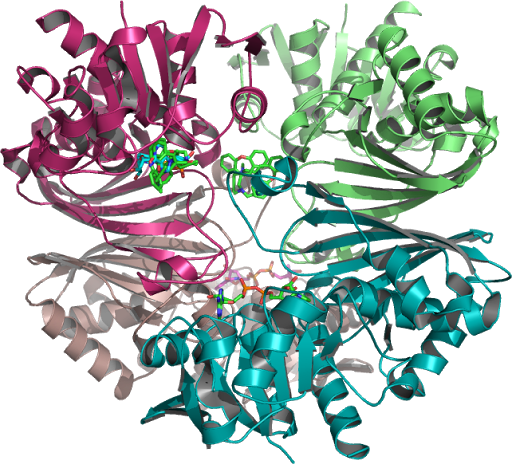 Analysis
of CGP-3466 Docking (NAD) to Human Placental GAPDH which decreases
the synthesis of pro-apoptotic proteins is N-terminally
PMID:10677844, processed to which a Rossmann NAD(P) binding fold as
seen in figure 1 is a C-terminal domain as seen on this page,
PMID:10617673, 26022259, 16510976 ...The structure is also used to
build a model of the complex between GAPDH and the E3 ubiquitin
ligase Siah1. (Purple Ribbon-1U8F_Q Figure 1.)
 In
the GAPDH-catalyzed reaction these intermediate metabolites
(aldolase, triose-phosphate-isomerase Glycolysis and Glyconeogenesis
(TPI)) catalyze the Glycolysis reactions, in the sequence of the ten
enzyme-catalyzed Embden-Meyerhof reactions in the metabolic
pathway. Converting phosphoglycerate mutase 1 (PGM) catalyzing the
internal steps by 2,3-BPG phosphatase to form by converting
D-glyceraldehyde 3-phosphate g3p(G3P) into 1,3-bisphosphoglycerate
(1,3-BPG) from its role as 3-Phosphoglyceric acid (3PG) in glycolysis
as the glycolytic protein GAPDH that catalyzes the first step (G3P
into 1,3-BPG) of the pathway.
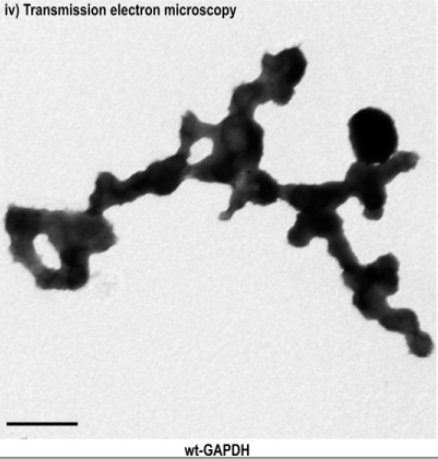 GAPDH
homotetramer was studied as represented an assembly of repeating
spherical units that harbored a distinct birefringent crystal
structure to the optic axis for the p polarization, also (r axis)
discernible via transmission electron microscopy. of the relative
amount of soluble monomeric GAPDH to G3P in the binding pocket of the
NAD(+)-binding site residue located at the active site linked to
GAPDH in Figures 5 and 6. PMID:10407144009,
25086035.
 Another
model building studie indicates that a structure obtained where
glyceraldehyde 3-phosphate PDB:3CMC_Q binds in the P(s) pocket of the
natural substrate G3P phosphorylating GAPDH (PDB:1U8F_Q) at the
catalytic cysteine residue site. To define the conditions suitable
for affinity for the cosubstrate, the isolation and accumulation of
the intermediate metabolites per G3P monomer found in Figure 8 of the
equivalent Glc-3-P structure in the binding pocket of the
NAD(+)-binding site residue located at the active site linked to
GAPDH. PMID:19542219,
22534308
 Correctly
known binding sites on ((GAPD/NAD)) structures, polar spheres of the
binding catalytic pocket that corresponds to G3P (glyceraldehyde
3-phosphate) aligned to the holographical structure nonbounded
spheres (salmon color), these apoenzymes together with the
cofactor(s) Cys 151, 152 which corresponds as below the Ps pocket of
G3P, on the Green ribbon required for cofactor activity. Together
with eliminated crystallographic waters and other possible spheres,
these are at least one atom of a amino acid residue in contact with
at least one alpha sphere of one binding pocket on the holo protein
NAD structure 1U8F_Q needed to align holo and apo structures included
in this data set with G3P (PDB:3CMC_Q) was tested only on holo
structure (NAD), obtained via Pea Green spheres aligned to 1U8F_Q
ribbons/ligand structure which provide structural recognition
insights into the biological 1U8F-Q assembly this includes 29
asymmetric units of its dimeric form, along the tetrameric 1U8F
biological forms axis. PMID:9461340010
 (Figure
8.) These are the results without the liquid chromatography coupled
mass spectrometer, that are known 3D products by two-dimensional
sequence analyses with the STRAP alignment tools data sets and which
may have any effect on the functions of further analysis involved in
more ordered results than this study attempts to show, of the
analysis that may be included are identified separated into multiple
gradients here in these paired graphs. Therefore in the present work
to uncover the exact coincidence of 1U8F_R and 4I7D_C, the 3D
coordinates of GAPDH (PDB:1U8F_Q) to the protein Siah1 4I7D were not
presenting when subjected to STRAP alignment this apparent
discrepancy (Figure 1.) was partially resolved by a (Figure 7)
rendering from a more reactive native GAPDH_R homotetramer model.